.jpg)
.jpg)
.jpg)

.jpg)
.jpg)

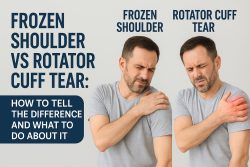
If you’re struggling with shoulder pain that won’t go away,...
Read More
Home » TESTIMONIALS FROM OUR PATIENTS
Lorem Ipsum is simply dummy text of the printing and typesetting industry. Lorem Ipsum has been the industry’s standard dummy text ever since the 1500s, when an unknown printer took a galley of type and scrambled it to make a type specimen book. It has survived not only five centuries, but also the leap into electronic typesetting, remaining essentially unchanged. It was popularised in the 1960s with the release of Letraset sheets containing Lorem Ipsum passages, and more recently with desktop publishing software like Aldus PageMaker including versions of Lorem Ipsum.

Patients have travelled from the EU, Russia, Israel, the UAE, Hong Kong, Singapore, Australia, South Africa, South America, Central America, and from cities all over North America to have Dr. Oolo-Austin’s MCD (Manual Capsular Dissection) Procedure performed. Frozen shoulder can be so painful and debilitating. It affects lives in ways that many people don’t realize. These former frozen shoulder sufferers got their frozen shoulders fixed by the MCD Procedure and got their lives back!
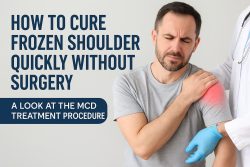
The MCD (Manual Capsular Dissection) Procedure is a non-surgical operation, pioneered by Dr. Oolo-Austin. It effectively and immediately restores mobility and range of motion to a frozen shoulder. It is the first such procedure ever developed and is a historic medical breakthrough as Adhesive Capsulitis Frozen Shoulder has been cited in all medical journals as incurable. Although many have tried, no other doctor in the world has been able to effectively and safely cure frozen shoulder (adhesive capsulitis) in one visit. Dr. Oolo-Austin is the first.
NO. The MCD Procedure is a quite safe, neurologically controlled, interactive re-mobilization of the shoulder joint capsule which results in very specific, targeted separation of the offending adhesive scar tissue and restored mobility to the shoulder and arm. High-velocity thrust or passive range of motion manipulation of a frozen shoulder is absolutely not recommended. Doing so can significantly worsen and prolong the condition and/or cause serious damage to the shoulder capsule, tendons, ligaments and holding elements. Research proves that standard physical-therapy type of treatments for frozen shoulder will not speed up recovery and will often lengthen recovery and worsen the condition. Aggressive physiotherapy or chiropractic manipulation treatments for a frozen shoulder are potentially dangerous and worsen the condition.
NO. But because tissues are carefully dissected and separated during the MCD operative procedure, one could technically define it as a form of “manual surgery”. The MCD Procedure is not traditional surgery because no external cuts or incisions of any kind are made. The MCD Procedure does, however, fall within the published definition of the word “operation” albeit, non-surgical in the conventional sense. As one physiotherapist described it, “The MCD Procedure is a paradox. “Dr. Oolo-Austin seems to be doing surgery without surgery.”
YES in most cases. Significant ranges of passive shoulder motion are returned immediately in most cases while others still require a little time for complete restoration. Almost every MCD patient will experience immediate near-full restoration of abduction (side raising) and greatly increased internal rotation. However, external rotation–sometimes referred to as the “I solemnly swear” position, will often purposely not be completely restored during the MCD operation as this particular position poses the greatest risk of injury. Dr. Oolo-Austin prefers to be particularly cautious in order not to incur any complications or damage, so he will often leave a small area of adhesions un-dissected. These adhesions always open by themselves later on during the specialized frozen shoulder home exercises prescribed by Dr. O and performed by the patient in weeks following the operation. In a minority of cases however, Dr. Oolo-Austin will restore full external rotation immediately. Each MCD procedure he performs will have different parameters and each patient’s case will be assessed and treated uniquely as a result.
YES. Many patients report a worsening of their frozen shoulder condition following aggressive physical therapy, soft-tissue myofascial-release muscle stripping techniques, or chiropractic adjustments of the neck or shoulder. This is because adhesive capsulitis is an inflammatory mediated disease and the shoulder and neck is thus highly reactive to treatment in which attempts are made to aggressively stretch the deep capsular adhesions. Research studies show that physical therapy either does not help or worsens the condition. Although often recommended by medical physicians, the clinical and research evidence points to the fact that physical therapy is CONTRAINDICATED for adhesive capsulitis frozen shoulder. Persons afflicted with adhesive capsulitis should not be getting any such treatments in our opinion. Active muscle release techniques, myofascial release treatments as well as muscle stripping or scraping with steel or plastic instruments (Graston) are completely inappropriate to treat severe deep joint capsule adhesions as they are only designed to target chronic superficial adhesions in the muscles and surrounding soft tissues. These kinds of treatments make no sense for this condition as they inadvertently or often purposely create an increase in local tissue inflammation which is the worst thing one can do for this condition! The fascia and muscles are not where the primary problem is in frozen shoulder. This is why so many patients resorting to this kind of improper treatment report a lot of pain during the treatments and a significant worsening of their condition. No treatment that is painful should ever be applied to an adhesive capsulitis frozen shoulder! If patients do feel some improvement during the course of physical treatments, it is generally because they would have been improving at that point in the progression of the disease anyway. Therapists or chiropractors, meaning well but trying too hard, in their futile frustration to treat frozen shoulder, will often find that they actually make the shoulder more painful and frozen and, as a result, the patient will unfortunately suffer with the pain of this condition for much longer than they would have otherwise. AVOID AGGRESSIVE THERAPIES for this reason!
NO. There is no other treatment method which can safely restore range of motion to a frozen shoulder in one visit. Most patients, who do not have underlying complications, muscle atrophy, nerve damage, or joint degeneration, are able to lift and lower their arm so that it is vertically beside their ear within 1 hour of having undergone the MCD Procedure. In cases where there is significant degenerative atrophy of the shoulder muscles, patients will be able to get their arm up vertically immediately following the MCD however, some weeks of rehabilitative strengthening exercises and neuromuscular re-training will be needed to enable them to actively raise it up themselves.
YES IN MOST CASES. Full or near-full side-raise motion and considerable arm-up-behind-the-back range of motion is usually restored immediately following the MCD. All ranges of motion will be recovered following the MCD. However it is not possible to immediately return the full range of motion in outward rotation of the shoulder in some cases. If the frozen shoulder is very severe (Grade 2 or 3), then performing the MCD Procedure in the full range of outward rotation direction has potential risk of injury.
This being the case, once the MCD operation has been performed, patients are given specialized self-treatment exercises which, if they do not have underlying complicating conditions or degenerative changes to the shoulder joint, enable full restoration of all ranges and functions. Our clinical survey research has shown that the majority of patients without degenerative joint disease or other significant complications such as tendonitis or bursitis, fully recover within 1 month of having the MCD Procedure. 98% of patients completely recover their range of motion after three months.
The MCD Procedure is very much a “non-surgical operation”. As a result, the first pain that the patient will experience is the often intense pain due to the dissection of the adhesive tissues in the frozen shoulder. The majority of this dissection (and the corresponding pain) occurs in 3 stages which take up a relatively brief period of the entire operation . There will also often be some less intense pain during the remainder of the 45-90 minute procedure.
Although the MCD patients’ pain is minimized through medication, patients may still experience various levels of pain depending on their individual pain thresholds (everyone is different). From our experience, we have observed the following:
We would like to stress that the more realistic question would be “How painful is the MCD Procedure compared to 2-5 years of pain (or even a lifetime of disability), including the pain caused by bone and tissue degeneration from a long-term freeze-up?” The obvious answer is that even one hour of pain is well worth not having to suffer for years with disability, pain, poor quality of life and the inability to carry on your daily activities without the burden of this dreadful condition.
NB: In July 2020, we have moved the procedure to an advanced medical facility which specializes in pain treatment. Using new innovative medical procedures, we are endeavoring to be able to anethetise the patient in such a way that they remain conscious but will not experience any pain during the MCD Operation. Not all cases will necessarily qualify for this new approach but, if this new method is used during your operation, it is our hope that you will not experience any pain.
The MCD Procedure is a non-surgical medical operation. As with any medical intervention, it is natural for some post-op pain or soreness to occur and the level and duration of the pain varies with each person–everyone is different. A minority of patients do not have pain but experience tightness and discomfort for a limited duration.
After the Frozen Shoulder MCD non-surgical operation, most patients will experience varying degrees of pain due to post-op inflammation, re-absorption by the body of dissected tissues, the necessary healing of raw dissected tissue , the rehabilitation of shortened or atrophied (degenerated) muscles, and the continuing ill effects and symptoms of any underlying conditions such as bursitis, tendinitis, or arthritis. There may also be some pain during specific movements or at the end ranges of motion for a few days to a few weeks after the procedure. Any night pain usually disappears the first night or two after the MCD Procedure. Most patients sleep well but a few experience night pain due to muscle soreness which can affect sleep quality. The post-op pain will decrease over time, especially when the exercise regimen is followed.
Compared to physiotherapy, MUA, Hydrodilatation, surgery, and other such treatments, patients who undergo the MCD Procedure experience drastically less soreness and discomfort in the weeks after treatment. Our clinical studies have shown that 25% of patients have no pain one week post-op, 50% of patients have no pain at one month. In the absence of underlying conditions which may complicate or prolong the normal recovery process (depending on the condition), 98% of patients are noted to have full recovery in 12 weeks. Please keep in mind that patients who have had frozen shoulder longer and, as a result, have suffered joint deterioration and muscle atrophy, will usually take longer to completely recover. Every patient’s case is unique.
Dr. Oolo-Austin’s MCD Procedure is designed to specifically open the shoulder joint and restore range of motion. However, if underlying conditions exist, these conditions will sometimes need to be addressed with additional interventions during the recovery process, which may last longer than three months. Furthermore, these underlying conditions can only be effectively treated after the shoulder joint is opened through the MCD Procedure. The MCD Procedure is therefore the first and most important step to regaining full shoulder health.
YES and NO. Follow-up rehabilitation treatments are often not necessary but they are recommended in certain cases. All frozen shoulder patients are provided with specific post-op exercises which they are to conduct daily for 3 months following their MCD Procedure. Follow-up therapy, by another health practitioner, conducted too soon after the MCD Procedure can re-aggravate the condition somewhat. In order to prevent this occurrence and to allow complete post-op recovery of the shoulder joint, it is not recommended for our patients to do active post-op rehabilitation therapy (if needed) until 4-6 weeks have passed. If the shoulder is a Grade 2 or 3 frozen shoulder, follow up therapy for complicating underlying soft tissue conditions which are often present, will lessen the overall recovery time. Dr. Oolo-Austin’s novel neurological muscular treatment protocols will quickly restore brain and muscle communication to optimize and restore shoulder muscle strength and function lost due to long-term immobility.
NO. Tearing is very non-specific and will pull, break, and damage the good, healthy tissue to which the scar tissue is attached. Tearing is what occurs with Manipulation Under General Anesthseia (MUA) and Hydrodilation which is very non-specific and, according to studies, often causes collateral permanent damage. The MCD non-surgical operation involves careful isolation and very specific dissection of only the bad tissue and none of the good. The difference between tearing and dissecting is significant. Tearing is dangerous and dissection is safe if it is properly controlled.
The true cause of adhesive capsulitis frozen shoulder is severe deep scar-like strong adhesions which grow to surround the shoulder joint capsule to cause a complete locking of the shoulder in the capsule. Although forward head carriage will lead to premature degenerative disc disease and arthritis in the lower neck, which is a contributing factor in the potential development of this condition, adhesive capsulitis frozen shoulder is not due to forward head carriage. (The majority of people with a forward head posture do not suffer from frozen shoulder.)
NO. Although some chiropractors are advertising a chiropractic neck and occiput adjusting technique will fix frozen shoulder, chiropractic manipulation of your neck or occiput will absolutely not fix the adhesive capsulitis type of frozen shoulder. Obviously no amount of neck manipulation will magically dissolve or suddenly separate deep and heavy shoulder capsule adhesions. If, however, you suffer from simple frozen shoulder impingement syndrome, you may find such chiropractic methods helpful over multiple treatments. Make sure you are properly diagnosed before you waste time and money on methods which will not work. For frozen shoulder impingement syndrome, thousands of patients testify to the fact that the best, safest, and most effective treatment available to you is Dr. Oolo-Austin’s specialized Myoneural Shoulder Impingement Procedure (MSIP).
YES AND NO. Gradual, gentle mobility exercises have been known, on occasion, to improve recovery time a bit. If, however, the exercises are not done correctly or carefully enough, they will worsen the condition and postpone recovery. One must be very careful with exercise when it comes to frozen shoulder.
Find out more about our frozen shoulder home exercises here!
YES. A lot of patients who have MRIs done on their shoulders discover that they have torn tendons in their shoulder. This is often a pre-disposing condition and is very common. Most of the patients Dr. Oolo-Austin treats have tendon tears. If their tendons have not healed properly and are still torn or inflamed following the MCD Procedure, the patient may not be able to move into the final end-range of shoulder movement without pain. It is also possible that, if the affected tendons cannot work properly, the active movement ability of the shoulder will still not be correct. In these cases, depending on the severity, rehabilitation exercise or physiotherapy is recommended for 6-12 weeks after the MCD Procedure.
USUALLY YES BUT SOMETIMES NO. Many patients who let the frozen shoulder run its course because they think it would eventually get better, develop arthritis in their shoulder and suffer terribly many years later with restricted mobility and chronic pain. Many other cases of frozen shoulder already have arthritis in the joint. If the shoulder joint is not fused, Dr. Oolo-Austin can still often perform the MCD Procedure or a modified version of it to eliminate pain and regain shoulder movement. Dr. Oolo-Austin will carefully screen your reports and radiographs (x-rays) and will only accept your case if he believes that your condition will improve with his operative procedures.
USUALLY. Dr. Oolo-Austin has successfully performed the MCD Procedure in many cases where frozen shoulder surgery had failed and the patients were still suffering terribly. He has also performed the procedure in many other cases where the patient had had prior shoulder surgery.
Click here to see x-rays of patients who had undergone surgery who were cured by the MCD Procedure!
USUALLY. Most patients with post-fracture surgery have responded well to Dr. Oolo-Austin’s treatment. The MCD Procedure is modified in these cases depending on how much damage there was and how much hard “wear” was put on the bones. Each of these cases is very carefully scrutinized and assessed before being accepted. Cases which have been accepted have had very successful results after the MCD Procedure.
UNLIKELY. Frozen shoulder is cited as being a “self-limiting disease” that goes away on its own. But the majority of sufferers who let it go its full, natural course of 2-3 years without having their shoulder joint capsule re-opened, will never regain full end-range motion in their shoulder joint. (Research shows this figure to be at about 61%) Various recent studies have shown that, without effective treatment intervention, between 20% and 50% of patients will continue to live with long-lasting, ongoing, symptoms
Patients who naturally recover from frozen shoulder without treatment function normally and without pain, most still find that some of the end-range of motion is permanently lost. This is because of the peri-articular arthritis which develops in the joint itself due to prolonged immobility. These are deteriorative changes which cannot be reversed and which pre-dispose patients to further advancing degenerative arthritis of their shoulder and neck. This is why it is very important for patients to have their shoulder joint re-opened with the MCD Procedure earlier than later. The sooner joint motion is restored, the less potential for permanent damage to the shoulder joint.
Having only been in existence for a 16 years, the MCD procedure is still a relative newcomer in the medical field. It usually takes about 20-30 years for a novel breakthrough medical procedure to reach mainstream public consciousness and general medical awareness. This process requires years of research, documentation, and publication as well as introduction to the teaching curriculum of medical schools. This is the reason for the 20-30 year timeframe. In addition, Dr. Oolo-Austin strives to ensure the highest success rate with the lowest risk of complications for his patients. As such, he has been honing and continually refining the operative protocols of the MCD Procedure over the last 16 years so that maximum positive outcome is achieved with the highest possible level of safety standards for the patient. There will come a time in the future when every doctor in the world acknowledges the MCD Procedure as the biggest breakthrough for frozen shoulder treatment in the history of medicine.
If you’re struggling with shoulder pain that won’t go away,...
Read MoreYou feel it every time you move, sharp jolts of...
Read MoreShoulder pain can stop you in your tracks, reaching for...
Read MoreLiving with a frozen shoulder is frustrating. Simple things like...
Read MoreRequest a Free Consultation with a consultant from the World Frozen Shoulder Clinics head office, to receive help and comprehensive information about Dr. Oolo-Austin’s MCD (Manual Capsular Dissection) Procedure for Adhesive Capsulitis Frozen Shoulder. Consultations are also provided for all other shoulder conditions including Frozen Shoulder Impingement Syndrome, Bursitis and Rotator Cuff Tendonitis.)